Introduction
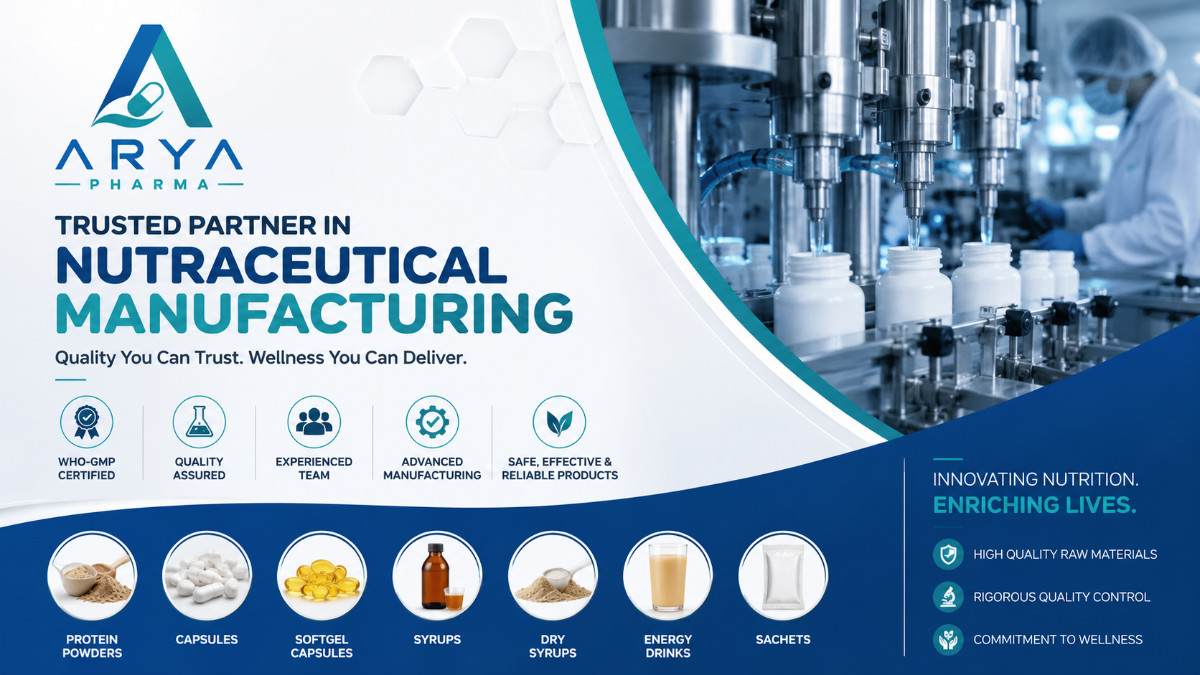
The nutraceutical industry is growing rapidly as consumers become more conscious about nutrition, wellness and healthy lifestyles. Products such as protein powders, multivitamins, capsules, softgel capsules, syrups, dry syrups, energy drinks and nutritional sachets are increasingly becoming part of the modern health and nutrition market.
But behind every quality nutraceutical product is a carefully controlled manufacturing process. From formulation and raw material selection to production, quality control, packaging and final dispatch, every stage requires proper planning, documentation and quality practices.
For businesses looking to launch or expand their own nutraceutical brands, third party nutraceutical manufacturing in Baddi offers an efficient way to manufacture products through an established manufacturing partner while allowing the brand to focus on marketing, sales and distribution.
What Is Nutraceutical Manufacturing?
Nutraceutical manufacturing is the controlled process of producing nutritional and wellness-oriented products according to an approved formulation and defined quality specifications.
Depending on the formulation and product requirements, nutraceutical manufacturing may include protein powders, tablets, capsules, softgels, syrups, dry syrups, energy drinks, nutritional powders and sachets.
A professional manufacturing process is not limited to production alone. It includes raw material management, controlled processing, quality checks, packaging, documentation and finished-product evaluation.
This complete approach helps maintain product consistency, quality and traceability from the beginning of manufacturing to the final product.
Why Is the Nutraceutical Manufacturing Process Important?
A well-controlled manufacturing process helps ensure that every batch is produced according to predetermined specifications.
It also helps manufacturers identify and control potential quality issues at different stages instead of relying only on finished-product testing.
Key objectives of a structured process include:
• Maintaining consistency between production batches
• Ensuring appropriate handling and storage of raw materials
• Following defined manufacturing procedures
• Monitoring important in-process parameters
• Conducting appropriate quality testing
• Maintaining accurate batch documentation
• Supporting product traceability
For companies searching for third party manufacturing in Baddi, understanding these processes is useful when comparing potential manufacturing partners.
Step 1: Product Planning and Formulation
The manufacturing journey begins with understanding the product concept and requirements. The brand and manufacturer determine the intended dosage form, ingredients, serving size, flavour, pack size and other product specifications.
The formulation is then developed or evaluated according to the intended product and applicable requirements. Each ingredient needs to be considered in relation to the overall formulation and manufacturing process.
A properly designed formulation provides the foundation for consistent production and determines many of the requirements for subsequent manufacturing stages.
Step 2: Raw Material Selection and Procurement
The quality of raw materials has a direct impact on the quality of the finished nutraceutical product.
Depending on the formulation, raw materials may include vitamins, minerals, proteins, amino acids, botanical ingredients and other permitted nutritional ingredients.
Materials are procured according to defined specifications and appropriate supplier requirements. Packaging materials such as bottles, containers, caps, sachet materials, labels and cartons are also selected according to the product requirements.
Proper storage conditions are maintained for materials based on their individual characteristics and requirements.
Step 3: Raw Material Inspection and Quality Testing
Before raw materials enter production, they are appropriately inspected and evaluated against established specifications.
The exact quality checks depend on the material and product. Depending on the requirements, these may include identity checks, physical characteristics, assay or potency-related testing, microbiological evaluation and review of relevant documentation.
Only materials that meet the applicable requirements should be approved for use.
This stage is an important part of GMP nutraceutical manufacturing because controlling materials at the beginning helps establish better control over the complete manufacturing process.
Step 4: Weighing and Dispensing
After approval, the required raw materials are accurately weighed according to the approved formulation and batch manufacturing requirements.
Controlled weighing is essential because incorrect quantities can affect the composition and consistency of the final product.
Materials are properly identified and documented during dispensing to reduce the risk of mix-ups and maintain batch traceability.
Step 5: Blending and Manufacturing
The actual production process varies according to the product's dosage form and formulation.
For powder-based products, ingredients may be blended using suitable equipment to achieve an appropriate level of uniformity. Capsule and tablet products may require additional processing steps depending on their formulation.
Liquid products such as syrups involve controlled preparation and mixing according to the approved manufacturing procedure.
The goal at this stage is to produce a consistent batch while maintaining the required manufacturing controls.
Step 6: Manufacturing According to Product Format
Different nutraceutical products require different manufacturing methods and equipment.
For example:
• Protein powders and nutritional powders require controlled weighing, blending and filling.
• Capsules involve formulation preparation followed by suitable encapsulation and inspection processes.
• Tablets generally require appropriate powder processing and compression followed by relevant quality checks.
• Softgel capsules require specialized encapsulation and processing suitable for the formulation.
• Syrups involve controlled preparation, mixing and filling.
• Dry syrups require suitable powder processing and filling into appropriate containers.
• Sachets require accurate product filling and sealing according to the packaging specifications.
The exact manufacturing procedure depends on the formulation, product specifications, equipment and applicable requirements.
This is why businesses looking for a nutraceutical manufacturer in Baddi should first confirm that the manufacturer has the appropriate capabilities for their specific product category.
Step 7: In-Process Quality Control
Quality control takes place throughout the manufacturing process, not only after the finished product is produced.
Appropriate in-process checks help monitor important parameters and identify potential issues before the batch proceeds to the next manufacturing stage.
Depending on the product, checks may include:
• Weight or fill quantity
• Physical appearance
• Product-specific physical characteristics
• Mixing-related parameters
• Filling accuracy
• Other defined in-process specifications
The purpose of these checks is to help maintain consistency throughout production.
Step 8: Filling and Primary Packaging
Once the product has completed the required manufacturing stages, it is filled into the specified packaging.
Depending on the product, packaging may include bottles, containers, sachets or other suitable formats.
The packaging system should be appropriate for the product and capable of protecting it during storage, handling and distribution.
Accurate filling is also important to ensure that the finished product meets its specified quantity requirements.
Step 9: Labeling and Secondary Packaging
After primary packaging, products are labeled and packed according to approved packaging specifications.
Labels may include information such as the product name, ingredient or nutritional information, net quantity, batch information, manufacturing details, date-related information and other declarations applicable to the product.
Secondary packaging such as cartons and outer boxes provides additional protection during handling and transportation.
For businesses using third party nutraceutical manufacturing in Baddi, approved packaging artwork and product information should be carefully reviewed before production to reduce the possibility of labeling or packaging errors.
Step 10: Finished Product Quality Testing
After manufacturing, the finished product undergoes appropriate quality evaluation before release.
Testing requirements vary according to the product, formulation and applicable specifications. Depending on the product, quality evaluation may include physical, chemical, microbiological or other relevant parameters.
The objective is to confirm that the finished batch meets its predefined specifications before it is released for distribution.
This stage plays an important role in maintaining confidence in the quality and consistency of the final product.
Step 11: Documentation and Batch Traceability
Documentation is a fundamental part of professional nutraceutical manufacturing.
Manufacturing and quality records provide information about the raw materials used, quantities, processing activities, quality checks and other relevant batch information.
Accurate records support batch traceability and provide a documented history of the manufacturing process.
For third party manufacturing, proper documentation also helps the manufacturer and brand owner maintain transparency and coordination throughout production.
Step 12: Final Batch Review and Release
After manufacturing and testing are completed, the relevant production and quality records are reviewed according to established procedures.
The batch can be released only after the required checks have been completed and the applicable specifications have been met.
This final review provides an additional level of control before the finished products move to storage and distribution.
Step 13: Storage and Dispatch
Released nutraceutical products are stored according to their product-specific storage requirements.
Appropriate warehouse practices help protect finished products from conditions that may negatively affect their quality, including unsuitable temperature, moisture, light or contamination where relevant.
Once the products are ready for dispatch, they are packed and transported according to the agreed requirements.
Role of GMP in Nutraceutical Manufacturing
Good Manufacturing Practices (GMP) provide a framework for maintaining controlled manufacturing and quality systems.
GMP principles cover areas such as personnel hygiene, premises, equipment, raw materials, production procedures, quality control, sanitation, documentation and traceability.
For businesses searching for GMP nutraceutical manufacturing in Baddi, it is important to evaluate not only certifications but also the manufacturer's actual facilities, quality systems, manufacturing capabilities and procedures relevant to the intended product.
A strong quality system helps create a controlled environment for consistent manufacturing.
Why Choose Third Party Nutraceutical Manufacturing in Baddi?
Baddi is a major industrial manufacturing hub in Himachal Pradesh and is well known for its pharmaceutical and related manufacturing ecosystem.
For growing nutraceutical brands, third party manufacturing in Baddi can provide access to established manufacturing infrastructure without requiring the brand to build its own production facility.
This model can help businesses focus their resources on branding, marketing, sales and distribution, while the manufacturing partner manages the agreed production activities.
However, the right manufacturing partner should be selected carefully based on product capabilities, quality systems, documentation, packaging facilities, production capacity and applicable requirements.
What to Check Before Choosing a Third Party Manufacturer
When searching for the best third party manufacturing in Baddi, businesses should evaluate more than manufacturing cost.
Important factors include:
• Experience with the required nutraceutical product category
• Suitable manufacturing facilities and equipment
• Quality-control procedures and testing capabilities
• Raw material sourcing and handling practices
• Manufacturing documentation and batch traceability
• Packaging and labeling capabilities
• Applicable certifications and regulatory requirements
• Production capacity and expected timelines
• Minimum order requirements
• Communication and customer support
Choosing a manufacturer based on these factors can help create a stronger and more reliable manufacturing partnership.
Why Baddi Is an Important Manufacturing Location
Baddi has developed into a significant industrial and manufacturing location in North India, supported by an established ecosystem of pharmaceutical and related industries.
This manufacturing environment provides businesses with access to experienced industry professionals, production infrastructure and supporting services.
As demand for nutritional and wellness products continues to grow, nutraceutical manufacturing in Baddi can offer opportunities for both established businesses and emerging brands looking to develop and scale their product portfolios.
Third Party Manufacturing for Growing Nutraceutical Brands
Third party manufacturing can be particularly useful for businesses that want to build their own nutraceutical brand without establishing an independent manufacturing facility.
A brand can work with a manufacturing partner for formulation, production, quality control and packaging while concentrating on areas such as brand development, marketing, sales and distribution.
The effectiveness of this model depends heavily on choosing a manufacturer that understands the product requirements and can consistently manufacture according to agreed specifications.
Common Mistakes to Avoid
Selecting a manufacturer only because it offers the lowest quotation can create challenges later. Price is important, but it should be evaluated alongside quality, capabilities and service.
Businesses should avoid:
• Choosing a manufacturer without checking relevant product capabilities
• Ignoring quality-control systems
• Not reviewing product specifications carefully
• Failing to confirm packaging requirements
• Not discussing minimum order quantities and timelines
• Overlooking documentation and traceability
• Selecting a manufacturer without evaluating communication and support
A detailed evaluation before starting production can help businesses build a more dependable manufacturing relationship.
Conclusion
The complete nutraceutical manufacturing process involves a series of controlled stages, beginning with product planning and formulation and continuing through raw material selection, testing, weighing, manufacturing, in-process quality control, packaging, finished-product testing, documentation and final release.
For businesses searching for third party nutraceutical manufacturing in Baddi, understanding these stages makes it easier to evaluate manufacturing partners and understand what goes into producing a quality nutraceutical product.
Whether you are launching a new product or expanding an existing portfolio, the right manufacturing partner should offer more than production capacity. Quality systems, appropriate infrastructure, product-specific expertise, documentation, consistency and reliable communication are all important for building a successful long-term nutraceutical brand.