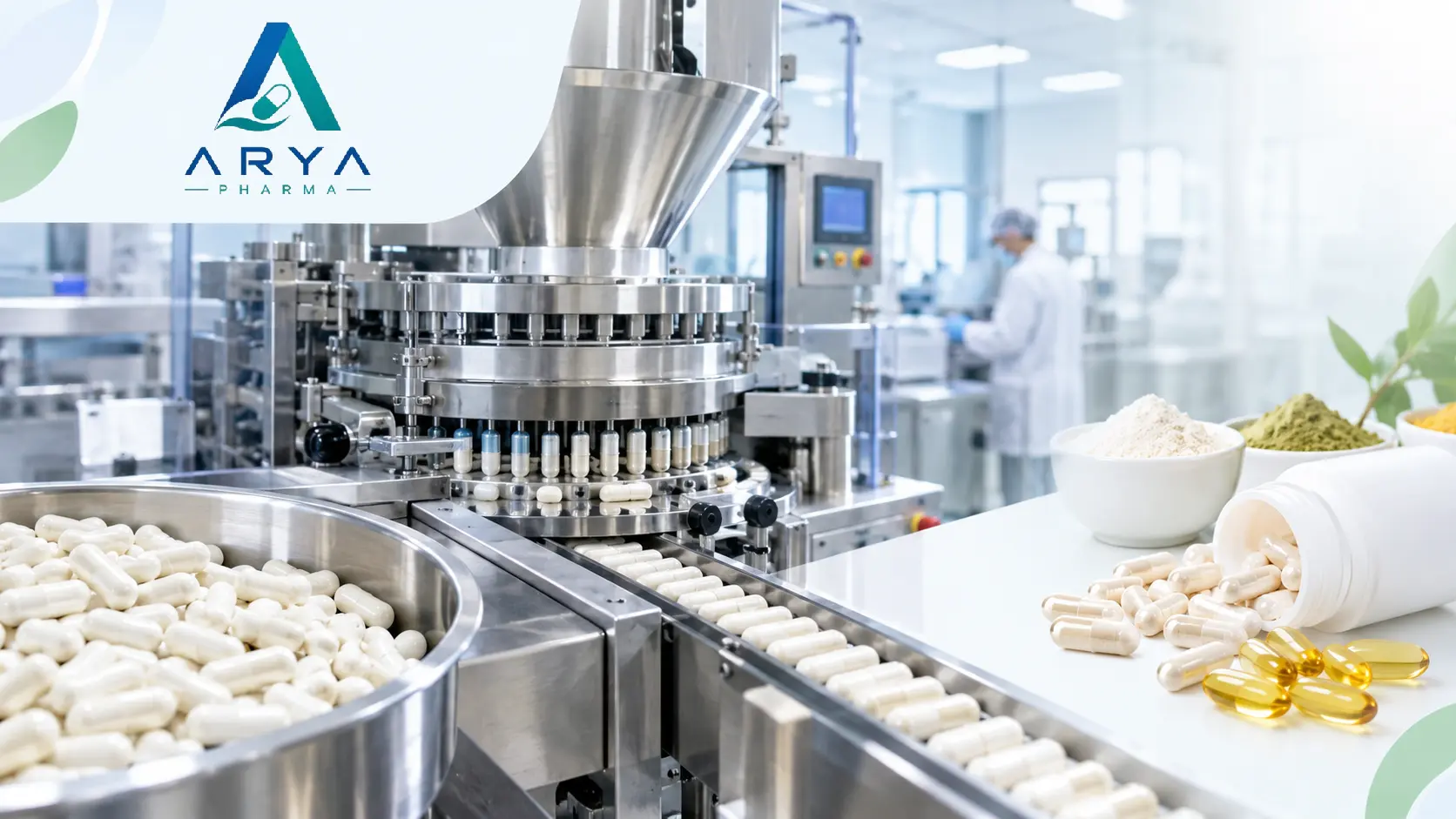
Nutraceutical Manufacturing in Baddi: Capsule Manufacturing Process Explained
Introduction
Capsules are a widely used dosage form in the nutraceutical industry because they provide a convenient way to deliver nutritional ingredients in a measured quantity. Depending on the formulation, nutraceutical capsules may contain vitamins, minerals, botanical extracts, amino acids, and other nutritional ingredients.
However, manufacturing a capsule involves more than placing ingredients inside a shell. The process can include formulation development, raw material inspection, ingredient preparation, blending, capsule filling, quality checks, packaging, and batch documentation.
Understanding the capsule manufacturing process helps businesses learn how different stages contribute to the quality and consistency of a finished product. It can also help brands prepare better questions when evaluating a manufacturing partner.
For businesses exploring nutraceutical manufacturing in Baddi, understanding how capsules are manufactured is a useful starting point for planning a nutraceutical product and discussing its requirements with a potential manufacturer.
What Is Capsule Manufacturing?
Capsule manufacturing is the process of preparing a suitable formulation and enclosing it within a capsule shell to produce a finished dosage unit.
In nutraceutical manufacturing, the contents may include nutritional ingredients such as vitamins, minerals, amino acids, botanical ingredients, or other components selected according to the product formulation.
The capsule shell holds the formulation and provides a convenient format for the intended product. The choice of shell, filling material, and manufacturing method depends on the product's characteristics and requirements.
Capsule manufacturing generally involves two important elements: preparing the formulation that goes inside the capsule and producing or sourcing suitable capsule shells. These elements are then brought together through an appropriate filling and finishing process.
The exact method can vary according to the capsule type, ingredients, equipment, and specifications of the finished product.
Types of Capsules Used in Nutraceutical Manufacturing
Capsules are not all manufactured in the same way. Two commonly discussed categories are hard-shell capsules and softgel capsules.
Hard-Shell Capsules
Hard-shell capsules generally consist of two parts: a body and a cap. They are commonly used for suitable powdered, granulated, or other compatible formulations.
The formulation is prepared according to the product specifications and filled into the capsule shells using an appropriate process. The filled capsules are then checked and prepared for packaging.
The suitability of a hard-shell capsule depends on factors such as the formulation's properties, fill characteristics, shell compatibility, and the intended product requirements.
Softgel Capsules
Softgel capsules use a flexible shell that encloses a suitable fill formulation. They are commonly associated with liquid, oil-based, or semisolid contents, depending on the formulation.
Softgel manufacturing involves a different process from conventional hard-shell capsule filling. It generally requires the preparation of the fill material and shell material, followed by forming, filling, sealing, and subsequent processing under controlled conditions.
The two capsule types therefore have different manufacturing requirements. Businesses should identify the dosage form they need before discussing manufacturing arrangements.
Capsule Manufacturing Process: Step by Step
The following stages describe a general approach to hard-shell nutraceutical capsule manufacturing. The precise process can vary depending on the formulation, capsule shell, equipment, and product specifications. Softgel manufacturing follows a different process.
1. Product Planning and Requirement Analysis
The first stage is defining the product requirements.
The business identifies the intended product, nutritional ingredients, dosage form, serving requirements, packaging format, and other relevant specifications. The intended market and applicable product requirements may also influence the planning process.
For example, a formulation containing selected vitamins and minerals may have different processing requirements from a capsule containing botanical ingredients or other nutritional components.
Clear product specifications help establish the basis for formulation development, material selection, production planning, and quality evaluation.
2. Formulation Development
Formulation development determines which ingredients will be used and the quantities required for the product.
The formulation must be appropriate for the intended capsule format and suitable for the characteristics of the selected ingredients. Factors such as ingredient compatibility, flow properties, moisture sensitivity, and the required fill quantity can influence the formulation.
Some formulations may require excipients to support manufacturing performance or other product characteristics. Their use depends on the formulation and applicable requirements.
A suitable formulation provides a defined basis for manufacturing and helps establish the specifications against which the finished product will be evaluated.
3. Selection of Ingredients and Capsule Shells
After the formulation is established, the required ingredients and capsule shells are identified.
Nutritional ingredients may include vitamins, minerals, amino acids, botanical ingredients, and other components according to the product requirements. Capsule shells must also be suitable for the intended formulation.
Shell selection may depend on material compatibility, product characteristics, moisture sensitivity, and other relevant considerations.
The ingredient and shell specifications should be established before production so that the materials selected are appropriate for the intended product.
4. Raw Material Inspection and Testing
Before production begins, incoming ingredients and other relevant materials are inspected and evaluated against defined requirements.
Depending on the material, checks may include identity, appearance, purity, strength, moisture, microbiological quality, or other applicable parameters.
The testing requirements vary according to the ingredient, product specifications, and relevant quality procedures.
This stage helps identify materials that do not meet the established requirements before they enter production.
5. Weighing and Dispensing
Once the required materials are approved for use, the ingredients are weighed according to the formulation.
Accurate weighing is essential because the quantity of each ingredient contributes to the composition of the finished product. Errors at this stage can affect formulation accuracy and consistency.
Material identification, controlled dispensing, and appropriate handling also help reduce the possibility of ingredient mix-ups.
The prepared ingredients can then proceed to the next stage according to the manufacturing procedure.
6. Sieving and Ingredient Preparation
Depending on the formulation, ingredients may need preparation before blending.
Sieving can be used where appropriate to break up lumps or help achieve a more suitable particle consistency. Other preparation steps may be necessary when the ingredients have specific handling or processing requirements.
Not every formulation requires the same preparation method. The decision depends on the characteristics of the materials and the requirements of the manufacturing process.
The objective is to prepare the ingredients for consistent processing and suitable capsule filling.
7. Blending and Uniformity
Blending combines the ingredients in the proportions specified by the formulation.
This is particularly important when a capsule contains multiple ingredients, especially when some components are present in relatively small quantities.
The blending process needs to be appropriate for the characteristics of the ingredients. Differences in particle size, density, flow properties, and other physical characteristics can influence how materials mix and remain distributed.
Appropriate blending procedures and relevant checks help assess whether the prepared mixture meets the required uniformity specifications.
8. Capsule Filling
Once the formulation is ready, it is filled into suitable hard-shell capsule bodies using an appropriate filling process.
The filling method depends on the formulation, capsule size, equipment, and production requirements. The process needs to deliver the intended quantity of formulation into each capsule.
After filling, the capsule caps and bodies are joined. The filled capsules may then undergo additional checks and finishing steps according to the applicable process.
Fill quantity, capsule integrity, and other relevant characteristics are important considerations at this stage.
9. In-Process Quality Checks
Quality checks are performed during manufacturing to monitor whether the process is operating according to its defined requirements.
Depending on the product, these checks may include fill weight, capsule appearance, closure, physical integrity, and other relevant parameters.
In-process checks can help identify inconsistencies during production so that they can be investigated and addressed according to the applicable procedures.
The specific checks and their frequency depend on the product, equipment, and established quality requirements.
10. Finished Product Testing
After capsule production is completed, the finished batch may undergo appropriate testing against its predefined specifications.
Depending on the formulation, tests may address identity, ingredient strength, uniformity, disintegration, microbiological quality, or other applicable parameters.
Not every test applies to every nutraceutical product. The testing plan should reflect the product formulation, applicable requirements, and established specifications.
The results help determine whether the finished product meets the criteria required for the next stage of processing or release.
11. Packaging and Labeling
After the required manufacturing and quality activities, capsules are prepared for packaging.
Depending on the product, packaging may involve bottles, blister packs, containers, or other suitable formats. The selection depends on the capsule characteristics, storage requirements, intended distribution, and product specifications.
Appropriate packaging helps protect capsules from environmental exposure and physical damage.
Labels may contain product identification, ingredient information, quantity, recommended usage, batch details, storage instructions, and other applicable declarations. The precise labeling requirements depend on the product category and relevant regulations.
12. Final Inspection and Batch Documentation
Before dispatch, packaged products may undergo a final inspection to check packaging condition, label information, batch details, quantity, and other relevant characteristics.
Manufacturing and quality records also play an important role. These records can document material usage, production activities, testing, packaging, and other batch-related information.
Proper documentation supports traceability and helps maintain a record of how a particular batch was manufactured and evaluated.
13. Storage and Dispatch
Once the applicable checks and release procedures are completed, finished products are stored under suitable conditions.
Storage requirements depend on the formulation, capsule shell, packaging, and product specifications. Appropriate storage helps protect the product before it is distributed.
The products can then be dispatched according to the agreed order, documentation, and logistics requirements.
Factors That Can Influence Capsule Manufacturing
Several factors can influence how capsules are formulated, processed, and evaluated.
• Ingredient characteristics: Particle size, density, flow properties, and moisture sensitivity can affect processing.
• Formulation compatibility: Ingredients and capsule-shell materials need to be suitable for the intended product.
• Fill quantity: The formulation and capsule size must be considered together to determine suitable filling requirements.
• Blending uniformity: Ingredients need to be distributed appropriately throughout the prepared mixture.
• Moisture management: Some ingredients and capsule materials may be sensitive to moisture, making handling and storage important.
• Packaging selection: Packaging should be appropriate for the product's characteristics and storage needs.
• Quality specifications: Testing and inspection requirements should be defined according to the product and applicable standards.
These considerations show why capsule manufacturing needs to be planned around the specific formulation rather than treated as a single process that works identically for every product.
Why Quality Control Matters in Nutraceutical Capsule Manufacturing
Quality control is relevant throughout the capsule manufacturing process, from the receipt of raw materials to the inspection of packaged products.
Different checks address different aspects of the product. Incoming material testing evaluates ingredients, in-process checks monitor manufacturing, and finished product testing assesses whether the completed batch meets its defined specifications.
Important quality considerations may include:
• Raw material identity and suitability
• Accurate weighing and dispensing
• Appropriate blending procedures
• Consistent capsule filling
• Capsule integrity and appearance
• Product-specific finished testing
• Packaging and label verification
• Batch documentation and traceability
The particular quality procedures depend on the formulation, product category, and applicable requirements. A clear understanding of these procedures helps businesses ask more informed questions when evaluating a manufacturing partner.
Third Party Nutraceutical Manufacturing in Baddi
Third-party manufacturing is a model in which a business works with an external manufacturing partner to produce products according to agreed specifications and arrangements.
For companies exploring third party nutraceutical manufacturing in Baddi, understanding the manufacturing process can help clarify what needs to be discussed before production begins.
Important topics include the intended capsule type, formulation, ingredient requirements, shell selection, packaging, quality specifications, production quantities, documentation, and expected timelines.
Businesses should also understand which activities the proposed manufacturing partner can support and which requirements may need separate arrangements.
When comparing options for third party manufacturing in Baddi, it is useful to evaluate relevant product capabilities, quality procedures, communication, documentation, and commercial terms rather than relying on price alone.
How to Choose a Capsule Manufacturing Partner
Selecting a manufacturing partner requires consideration of the product's specific needs.
1. Confirm the capsule type. Establish whether the product requires hard-shell capsules or softgels because their manufacturing methods differ.
2. Discuss the formulation. Explain the intended ingredients, quantities, and other product requirements.
3. Review material handling procedures. Understand how raw materials are identified, evaluated, stored, and prepared.
4. Ask about blending and filling capabilities. Confirm that the proposed process is suitable for the formulation and required capsule format.
5. Understand the quality testing plan. Ask which checks apply to incoming materials, production, and the finished product.
6. Review packaging options. Discuss suitable packaging formats and the product's storage requirements.
7. Clarify labeling requirements. Establish which product information and declarations will be needed.
8. Discuss documentation and traceability. Understand what batch-related records will be maintained and provided.
9. Confirm production planning. Discuss order quantities, expected timelines, and any relevant production constraints.
10. Compare the overall arrangement. Evaluate capabilities, quality processes, communication, documentation, and commercial terms before making a decision.
A clear discussion of these points can help businesses assess whether a manufacturing arrangement suits their product requirements.
Common Mistakes to Avoid
Businesses planning nutraceutical capsules should avoid making decisions based on incomplete information.
Common mistakes include:
• Selecting a manufacturing partner based only on the lowest quotation.
• Not clarifying whether the product requires hard capsules or softgels.
• Providing incomplete formulation or ingredient specifications.
• Overlooking material compatibility and handling requirements.
• Failing to discuss the applicable quality testing plan.
• Not confirming packaging and labeling requirements.
• Leaving production quantities and timelines unclear.
• Not discussing documentation and batch traceability.
Clear specifications and realistic expectations can help make the manufacturing process more organized and reduce avoidable misunderstandings.
How Arya Pharma Baddi Can Help With Nutraceutical Product Requirements
Arya Pharma Baddi focuses on nutraceutical manufacturing, with product categories that include tablets, capsules, softgels, protein powders, sachets, syrups, and dry syrups.
Businesses exploring a nutraceutical product can begin by defining the intended dosage form, ingredients, product specifications, packaging needs, and other requirements. These details provide a starting point for discussing the manufacturing arrangement and determining which capabilities are needed.
For companies researching nutraceutical manufacturing in Baddi, it is important to understand the requirements of the intended product and discuss them clearly with a potential manufacturing partner.
In addition to capsule-related product requirements, businesses developing a broader nutraceutical portfolio may also explore other dosage forms, depending on the capabilities and arrangements available for their specific needs.
Arya Pharma Baddi can be approached to discuss nutraceutical product requirements and determine whether the relevant manufacturing arrangements are suitable for the proposed product.
Conclusion
The capsule manufacturing process involves several connected stages, including product planning, formulation development, raw material inspection, weighing, ingredient preparation, blending, capsule filling, quality checks, packaging, documentation, and storage.
The precise process varies according to the capsule type, ingredients, formulation, equipment, and product specifications. Hard-shell capsules and softgels, in particular, require different manufacturing approaches.
For businesses exploring nutraceutical manufacturing in Baddi or third party nutraceutical manufacturing in Baddi, understanding these stages can help them communicate product requirements more clearly and evaluate potential manufacturing partners more effectively.
A well-defined formulation, suitable manufacturing process, appropriate quality checks, and clear documentation provide a practical foundation for developing nutraceutical capsule products.