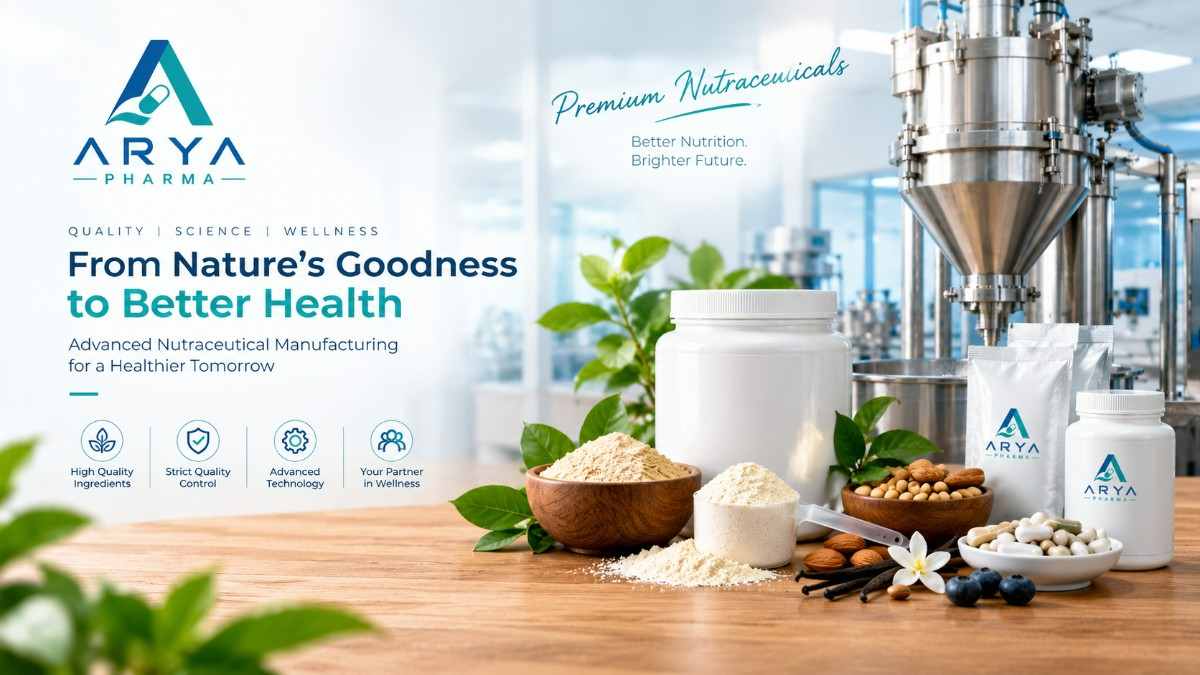
How Protein Powder Is Manufactured: A Complete Guide
Introduction
Protein powder is one of the most widely recognized nutritional supplement products available today. It is used by different types of consumers, including people looking to increase their daily protein intake, athletes, fitness enthusiasts, and individuals following specific nutritional routines.
But how does protein go from a raw ingredient to the finished powder packed inside a container or sachet?
The manufacturing of protein powder involves several controlled stages. These can include ingredient selection, raw material inspection, weighing, blending, processing, quality testing, filling, packaging, and final inspection.
Understanding how protein powder is manufactured provides useful insight into the work involved in producing a consistent finished product and why choosing an appropriate manufacturing partner matters.
For businesses exploring nutraceutical manufacturing in Baddi, protein powder manufacturing can be an important part of developing a broader nutraceutical product portfolio.
What Is Protein Powder?
Protein powder is a powdered nutritional product formulated to provide protein in a convenient form.
Depending on the formulation, protein powder can be made using different protein sources. These may include milk-derived proteins, plant-based proteins, or other suitable protein ingredients.
A protein powder formulation may also contain other ingredients depending on the intended product, such as flavours, sweeteners, vitamins, minerals, functional ingredients, or other nutritional components.
The exact composition and manufacturing process depend on the product formulation and the specifications established for the finished product.
Why Protein Powder Manufacturing Requires a Controlled Process
Protein powder may look like a simple powdered product, but producing a consistent formulation requires careful control of several factors.
The ingredients need to be correctly identified and measured. Different components need to be blended properly, and the finished powder needs to maintain suitable characteristics throughout processing, filling, storage, and distribution.
Factors such as particle characteristics, moisture, ingredient compatibility, flavour distribution, and blending uniformity can influence the final product.
This is why professional nutraceutical manufacturing involves multiple stages rather than simply mixing ingredients together.
How Protein Powder Is Manufactured
The exact process can vary depending on the formulation, protein source, ingredients, equipment, and product specifications. However, the major stages generally include the following.
1. Product Planning and Formulation
Before manufacturing begins, the product requirements need to be established.
The formulation determines the protein source, protein quantity, serving size, additional ingredients, flavour profile, and other characteristics of the product.
For example, a product may be designed around a particular protein source and may also include flavouring, sweetening ingredients, vitamins, minerals, or other nutritional components.
The formulation provides the basis for determining how the ingredients will be processed and blended.
2. Selection of Protein and Other Ingredients
Once the formulation is established, the required ingredients are identified and sourced according to the product specifications.
The primary protein ingredient forms the foundation of the product, while other ingredients may be included to achieve the desired nutritional and sensory characteristics.
Depending on the formulation, these may include flavours, sweeteners, vitamins, minerals, stabilizing ingredients, or other suitable components.
Selecting appropriate ingredients is important because differences in ingredient characteristics can influence the processing and final properties of the powder.
3. Raw Material Inspection
Before ingredients enter production, they are inspected and evaluated according to the applicable specifications.
This stage helps confirm that the materials received are the intended ingredients and that they meet the required quality parameters.
Depending on the material, relevant checks can include identity, appearance, purity, strength, moisture, microbiological parameters, or other applicable characteristics.
Only materials that meet the defined requirements should proceed through the manufacturing process.
4. Weighing and Dispensing
After the raw materials are approved, each ingredient is accurately weighed according to the formulation.
This is an important stage because the final composition depends on the correct quantity of every ingredient.
Accurate weighing also helps maintain batch-to-batch consistency and reduces the possibility of formulation errors.
Proper identification and controlled handling of ingredients are equally important during dispensing.
5. Sieving and Preparation of Ingredients
Depending on the ingredients and manufacturing process, some materials may require preparation before blending.
Sieving can be used where appropriate to remove unwanted lumps and help create a more suitable particle consistency for subsequent processing.
The purpose of this stage is to prepare the ingredients for efficient and uniform blending.
The exact preparation requirements depend on the characteristics of the raw materials and the product formulation.
6. Blending of Ingredients
Blending is one of the most important stages in protein powder manufacturing.
The protein ingredient and other components are combined in controlled proportions and mixed to achieve a uniform distribution throughout the batch.
Uniform blending is particularly important when the formulation contains smaller quantities of vitamins, minerals, flavours, or other ingredients.
The objective is to ensure that the finished powder has a consistent composition throughout the batch.
7. Addition of Flavours and Other Ingredients
Many protein powders contain additional ingredients to provide a specific taste, nutritional profile, texture, or other product characteristics.
These ingredients are incorporated according to the formulation and manufacturing process.
Flavours and sweetening components, for example, need to be distributed appropriately throughout the powder so that the finished product provides a consistent experience.
The timing and method of addition can depend on the formulation and the characteristics of the individual ingredients.
8. In-Process Quality Checks
Quality monitoring continues during the manufacturing process.
Depending on the product, in-process checks may evaluate parameters such as appearance, blending uniformity, weight, moisture, flow characteristics, or other relevant properties.
These checks help identify potential issues during production and provide an opportunity to address them before the batch moves to the final stages.
9. Finished Protein Powder Testing
Once blending and processing are completed, the finished powder can undergo appropriate quality testing.
The exact tests depend on the formulation and applicable product specifications. They may include physical, chemical, nutritional, and microbiological parameters where relevant.
Testing helps determine whether the finished batch meets its defined specifications before it proceeds to packaging.
This stage is important for maintaining consistency and ensuring that the finished product corresponds to the approved requirements.
10. Filling and Packaging
After the product completes the required manufacturing and quality stages, it is prepared for filling and packaging.
Protein powders may be packed in containers, jars, pouches, sachets, or other suitable packaging formats depending on the product requirements.
Accurate filling is important because each pack needs to contain the specified quantity.
Packaging also serves an important protective function by helping shield the powder from external factors such as moisture, contamination, and physical damage.
11. Labeling
The packaged product then requires appropriate labeling.
Depending on the applicable requirements, the label may include information such as the product name, ingredient information, nutritional information, recommended usage, quantity, batch information, manufacturing details, storage instructions, and applicable date information.
Clear labeling helps communicate important product information to distributors, retailers, and consumers.
12. Final Inspection and Batch Release
Before finished products are dispatched, the packaged units can undergo final inspection.
This may involve checking packaging condition, label information, batch details, quantity, appearance, and other relevant parameters.
Once the required manufacturing, quality, documentation, and inspection activities have been completed, the batch can proceed according to the applicable release process.
What Factors Can Affect Protein Powder Quality?
Several factors can influence the characteristics and consistency of a protein powder.
• Raw material quality: The characteristics of the protein and other ingredients can influence the final product.
• Ingredient proportions: Accurate weighing is important for maintaining the intended formulation.
• Blending: Proper blending helps distribute ingredients consistently throughout the batch.
• Moisture: Powder products can be affected by moisture during processing and storage.
• Packaging: Suitable packaging can help protect the product from environmental exposure.
• Storage: Appropriate storage conditions can help maintain the product's intended characteristics.
• Quality testing: Testing provides information about whether the finished product meets its defined specifications.
These factors demonstrate why protein powder production requires a structured manufacturing approach.
Different Types of Protein Powder
Protein powder is not a single type of product. Different formulations can use different protein sources and supporting ingredients.
Some common categories include:
• Milk-based protein powders: These use protein ingredients derived from milk.
• Plant-based protein powders: These may use protein sources such as peas, soy, rice, or other plant ingredients.
• Protein blends: These combine more than one protein source within the same formulation.
• Specialized nutritional formulations: These may combine protein with additional nutritional ingredients according to the intended product requirements.
The choice of protein source depends on the product concept, formulation, target consumers, nutritional objectives, and other requirements.
Protein Powder Manufacturing Under Nutraceutical Manufacturing
Protein powder manufacturing falls within the broader field of nutraceutical manufacturing when the product is developed as a nutritional or wellness-oriented product.
The same general manufacturing principles apply: defined formulation, controlled raw materials, accurate weighing, appropriate processing, quality checks, packaging, and documentation.
However, the exact manufacturing process depends on the characteristics of the individual protein formulation.
This is why businesses should evaluate whether a potential manufacturing partner has the appropriate capabilities for the specific protein product they want to develop.
Third Party Nutraceutical Manufacturing in Baddi
For businesses that do not operate their own manufacturing facility, third party nutraceutical manufacturing in Baddi can provide an alternative approach to developing and producing nutraceutical products.
Under a third party manufacturing arrangement, the business works with a manufacturing partner to produce products according to agreed specifications and requirements.
For protein powder projects, it is useful to discuss the formulation, protein source, ingredient requirements, serving size, packaging format, quality expectations, production quantity, and other specifications before manufacturing begins.
Businesses looking for third party manufacturing in Baddi should evaluate manufacturers based on their relevant product capabilities rather than relying on a single factor such as price.
How to Choose a Protein Powder Manufacturing Partner
Selecting a suitable manufacturing partner is an important step when developing a protein powder product.
1. Check the manufacturer's experience with powdered nutraceutical products.
2. Understand whether the manufacturer can work with the required protein source and formulation.
3. Ask how incoming raw materials are inspected and evaluated.
4. Understand the blending and processing capabilities available for the product.
5. Discuss the quality testing and in-process checks associated with the finished product.
6. Review available packaging formats and filling capabilities.
7. Discuss production quantities and expected manufacturing timelines.
8. Clarify documentation, specifications, and batch-related information before production.
9. Make sure product requirements are clearly communicated and understood by both sides.
10. Compare overall manufacturing capabilities, quality processes, communication, and commercial terms before making a decision.
A well-defined manufacturing discussion at the beginning can help reduce confusion and make the product development process more organized.
How Arya Pharma Can Help With Protein Manufacturing
For businesses exploring protein product development, Arya Pharma Baddi can be considered as a nutraceutical manufacturing partner for the requirements it supports.
Protein powder is one part of a broader nutraceutical product portfolio. Depending on the product requirements, businesses may also explore other dosage forms such as tablets, capsules, softgels, sachets, syrups, and dry syrups.
This can be useful for businesses that want to develop more than one product under a nutraceutical brand instead of limiting their portfolio to a single product format.
Before beginning a manufacturing project, businesses can discuss the product concept, formulation requirements, ingredients, dosage form, packaging, quantity, and other specifications with the manufacturing team.
For companies exploring nutraceutical manufacturing in Baddi, having a clear understanding of the product requirements and manufacturing process can make the initial discussion more productive.
Why Understanding the Manufacturing Process Matters
A business does not need to operate a manufacturing facility to understand how its product is made.
Knowing the basic stages of protein powder manufacturing helps businesses ask better questions, understand production requirements, evaluate manufacturing partners, and communicate product specifications more clearly.
It also helps separate the different parts of the process, from formulation and raw material selection to blending, quality testing, packaging, and final dispatch.
Whether a business is developing its first protein product or expanding an existing nutraceutical portfolio, understanding the manufacturing process provides a stronger foundation for planning.
Conclusion
Protein powder manufacturing involves a series of connected stages, beginning with product planning and formulation and continuing through ingredient selection, raw material inspection, weighing, preparation, blending, quality testing, filling, packaging, labeling, and final inspection.
The exact process can vary depending on the protein source, formulation, ingredients, dosage requirements, packaging, and product specifications.
For businesses exploring nutraceutical manufacturing in Baddi or third party nutraceutical manufacturing in Baddi, understanding these stages can help them evaluate manufacturing capabilities and communicate their requirements more effectively.
Whether the requirement is protein powder or another nutraceutical dosage form, a clear formulation, defined specifications, suitable manufacturing capabilities, and appropriate quality processes are important parts of developing a consistent finished product.