Have you ever looked at the date printed on a medicine bottle or nutritional supplement and wondered what it actually means? Is the product safe to use until that date? Does it become ineffective immediately after? Is shelf life the same as the expiry date?
These are some of the most common questions consumers, healthcare professionals, and even new pharmaceutical businesses ask. Understanding shelf life is important because it directly affects the safety, quality, and effectiveness of medicines and nutraceutical products.
Whether you are purchasing a multivitamin, protein powder, herbal supplement, syrup, tablets, capsules, or any other healthcare product, knowing how shelf life works helps you make informed decisions.
At Arya Pharma Baddi, quality and product stability are considered essential throughout the manufacturing process. As a trusted name in Third Party Manufacturing in Baddi, Nutraceutical Manufacturing in Baddi, and Food Manufacturing in Baddi, we believe educating customers and business partners is just as important as manufacturing quality products.
What Is Shelf Life?
Shelf life is the period during which a medicine, nutraceutical, or food supplement remains safe, effective, and maintains its intended quality when stored under the recommended conditions.
During its shelf life, the product should continue to meet the manufacturer's quality standards, including:
• Safety
• Strength or potency
• Purity
• Physical appearance
• Taste and odor (where applicable)
• Stability of active ingredients
• Packaging integrity
Once the established shelf life has passed, manufacturers can no longer guarantee that the product will continue to meet these standards.
Why Is Shelf Life Important?
Shelf life is not simply a date printed on the packaging. It represents years of scientific research, laboratory testing, and quality evaluations.
A properly determined shelf life helps ensure:
• Consumers receive products that are safe to use.
• Active ingredients remain effective.
• Product quality remains consistent.
• Businesses maintain customer trust.
• Regulatory standards are met.
• Waste due to product deterioration is minimized.
Without proper shelf-life studies, manufacturers cannot confidently assure customers that their products will perform as intended throughout their market life.
Shelf Life vs Expiry Date
Many people believe shelf life and expiry date mean the same thing, but they are slightly different.
Shelf Life:
• The total period during which a product is expected to remain stable under recommended storage conditions.
• Determined through scientific stability studies.
• Begins from the manufacturing date.
Expiry Date:
• The final date up to which the manufacturer guarantees the product's quality, safety, and effectiveness when stored correctly.
• Printed on the product label for consumer reference.
In simple terms, shelf life is the scientifically established duration, while the expiry date is the specific calendar date calculated from that shelf life.
How Is Shelf Life Determined?
Shelf life is not estimated or guessed. It is established through carefully designed stability studies conducted under controlled laboratory conditions.
Manufacturers evaluate products over time to determine how they respond to different environmental conditions while monitoring changes in quality.
The process generally includes:
- Stability Testing
- Samples are stored under different environmental conditions for extended periods. Scientists regularly evaluate:
- • Appearance
- • Color
- • Odor
- • Moisture content
- • Dissolution
- • Potency
- • Microbiological quality
- • Packaging performance
- Real-Time Stability Studies
- Products are stored under normal recommended storage conditions for months or years. These studies provide actual information about how the product behaves during its intended market life.
- Accelerated Stability Studies
- Products are stored at higher temperature and humidity conditions to predict long-term stability in a shorter period. These studies help manufacturers estimate product performance while waiting for real-time study results.
- Laboratory Analysis
- Each testing interval includes detailed laboratory evaluations to confirm that the product continues to meet established quality specifications. Only after sufficient scientific evidence is collected can an appropriate shelf life be assigned.
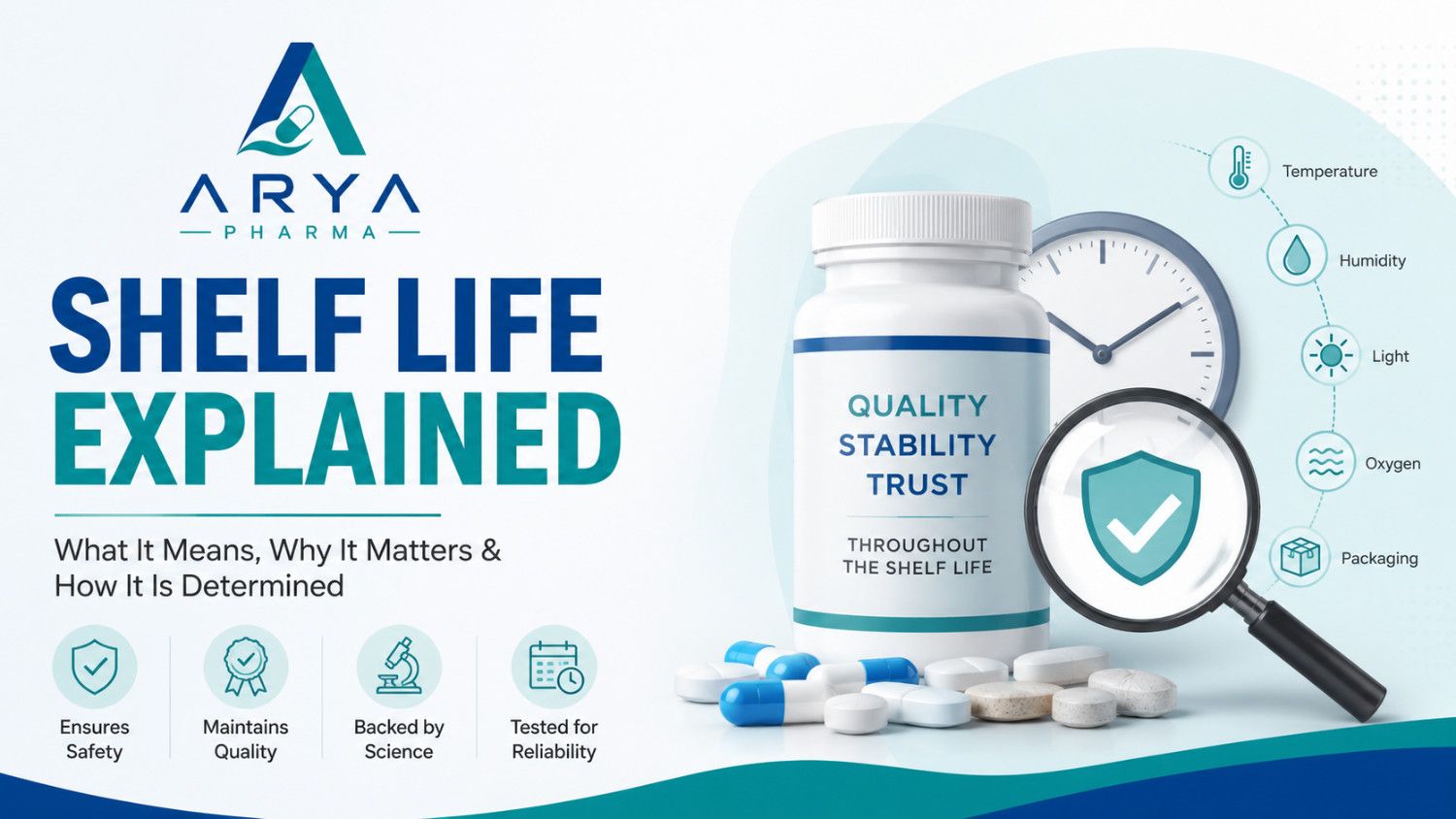
Factors That Affect Shelf Life
Several factors influence how long a medicine or nutraceutical product remains stable.
Temperature:
Heat is one of the biggest factors affecting product stability. Higher temperatures may accelerate chemical degradation and reduce the effectiveness of active ingredients.
Humidity:
Moisture can damage tablets, capsules, powders, and food supplements by encouraging chemical reactions or microbial growth. Proper moisture control is critical throughout manufacturing and storage.
Light Exposure:
Some ingredients are highly sensitive to sunlight or ultraviolet radiation. Exposure may cause discoloration or reduce product potency. This is why many products are packed in amber-colored bottles or protective packaging.
Oxygen:
Exposure to oxygen may lead to oxidation of certain vitamins, herbal extracts, and oils. Proper sealing and protective packaging help reduce this risk.
Packaging Quality:
Packaging serves as the product's first line of protection. High-quality packaging protects products from:
• Moisture
• Oxygen
• Light
• Contamination
• Physical damage
A well-designed package can significantly improve product stability.
Manufacturing Quality:
The quality of raw materials, manufacturing practices, production environment, and quality control procedures all contribute to the final shelf life of a product. Manufacturers following Good Manufacturing Practices (GMP) maintain strict quality standards to ensure product consistency.
Storage Conditions Matter
Even products manufactured to the highest quality standards can lose stability if stored improperly.
Consumers should always follow storage instructions mentioned on the product label.
General recommendations include:
• Store in a cool, dry place.
• Keep away from direct sunlight.
• Avoid excessive humidity.
• Keep containers tightly closed.
• Do not expose products to extreme heat.
• Keep products out of reach of children.
Improper storage can reduce product quality even before the printed expiry date.
Does a Longer Shelf Life Mean Better Quality?
Not necessarily.
A longer shelf life does not automatically indicate a superior product. Shelf life depends on several factors, including:
• Product formulation
• Active ingredients
• Manufacturing process
• Packaging technology
• Storage recommendations
Some products naturally have shorter stability periods because of their ingredient composition. What matters most is that the manufacturer scientifically validates the assigned shelf life through appropriate stability studies.
Can Shelf Life Be Extended?
Manufacturers cannot simply decide to increase a product's shelf life.
Any extension requires additional scientific evidence through stability studies demonstrating that the product continues to meet quality standards for the extended period. Without supporting data, extending shelf life would not be appropriate.
Common Myths About Shelf Life
Myth 1: Shelf Life Is Just an Estimate
False. Shelf life is determined through extensive scientific testing, laboratory analysis, and regulatory guidelines.
Myth 2: Expired Products Become Dangerous Immediately
Not always. However, manufacturers cannot guarantee the safety, quality, or effectiveness of products beyond the expiry date. For this reason, using expired medicines or supplements is generally not recommended.
Myth 3: Packaging Does Not Matter
Incorrect. Packaging plays a major role in protecting products from moisture, oxygen, contamination, and light, all of which can affect stability.
Myth 4: All Products Have the Same Shelf Life
No. Different medicines and nutraceutical products have different stability characteristics depending on their ingredients and formulations.
Quality Standards Behind Every Product
Reliable manufacturers follow strict quality systems throughout the product lifecycle.
These typically include:
• Careful raw material selection
• Controlled manufacturing processes
• Quality inspections
• Stability testing
• Microbiological testing
• Proper packaging
• Batch documentation
• Regulatory compliance
These practices help ensure that products maintain their intended quality throughout their assigned shelf life.
Frequently Asked Questions
- What is the difference between shelf life and expiry date?
- Shelf life is the scientifically determined duration for which a product remains stable, while the expiry date is the specific calendar date printed on the package based on that shelf life.
- Can medicines or supplements be used after the expiry date?
- Manufacturers cannot guarantee the product's safety, quality, or effectiveness after the expiry date. It is generally recommended to avoid using expired products.
- Why should products be stored in a cool and dry place?
- Heat and moisture can accelerate product degradation and reduce stability.
- Does unopened packaging increase product life?
- Properly sealed packaging helps protect products throughout their intended shelf life when stored according to label instructions.
- Why do different products have different shelf lives?
- Every formulation contains different ingredients with unique stability characteristics, resulting in varying shelf lives.
Why Businesses Choose Arya Pharma Baddi
For companies looking to launch high-quality healthcare products, choosing the right manufacturing partner is essential.
Arya Pharma Baddi focuses on quality-driven manufacturing processes supported by modern facilities and industry-standard quality practices. As a trusted partner for Third Party Manufacturing in Baddi, Nutraceutical Manufacturing in Baddi, and Food Manufacturing in Baddi, we are committed to producing products that meet stringent quality expectations.
Whether you are planning to introduce tablets, capsules, powders, syrups, sachets, protein supplements, herbal formulations, or other nutraceutical products, working with an experienced manufacturing partner helps ensure consistency, quality, and customer confidence.
Businesses looking for the Best Third Party Manufacturing in Baddi or Top Third Party Manufacturing in Baddi often prioritize manufacturers that emphasize quality control, regulatory compliance, reliable packaging, and product stability throughout the manufacturing process.
Conclusion
Shelf life is much more than a printed date on a package. It reflects the scientific work, quality testing, stability studies, and manufacturing excellence that ensure medicines and nutraceutical products remain safe and effective throughout their intended lifespan.
Understanding how shelf life is determined helps consumers make informed choices and highlights the importance of purchasing products from trusted manufacturers that follow established quality standards.
At Arya Pharma, we believe quality begins long before a product reaches the market. Through careful manufacturing practices, attention to quality, and a commitment to excellence, we strive to support businesses with dependable Third Party Manufacturing in Baddi, Nutraceutical Manufacturing in Baddi, and Food Manufacturing in Baddi, delivering products that customers can trust.