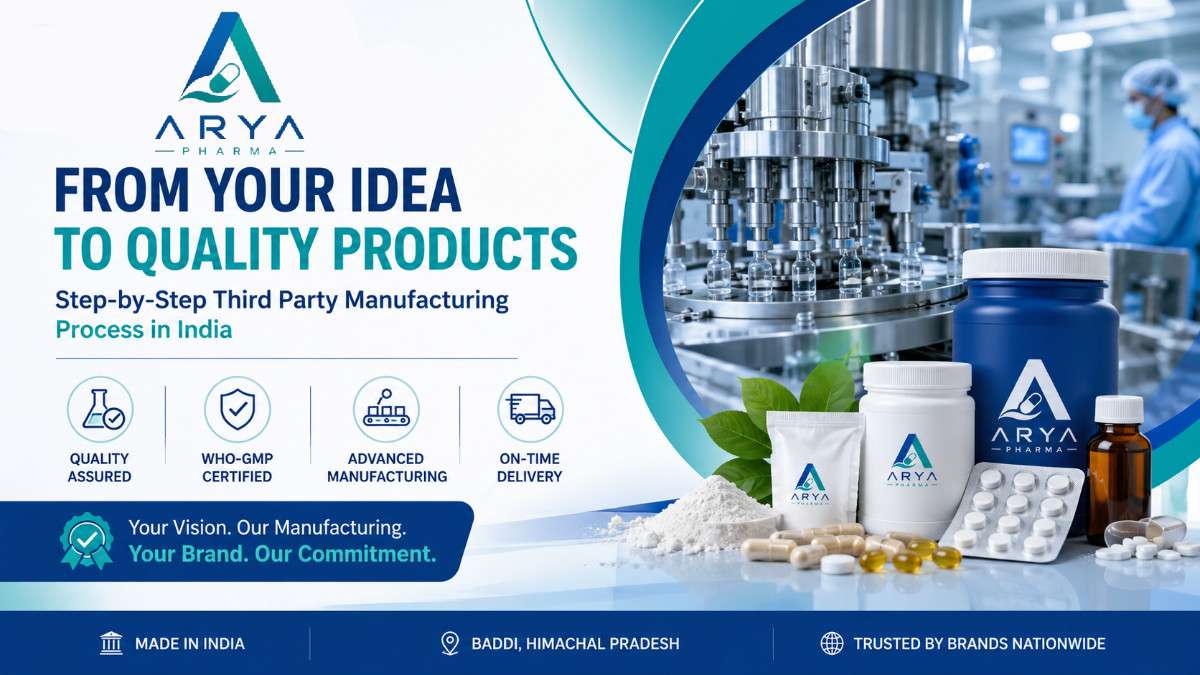
Step-by-Step Third Party Manufacturing Process in India: Complete Guide for Pharma & Nutraceutical Brands
Starting your own pharmaceutical or nutraceutical brand is easier today than ever before. Thanks to Third Party Manufacturing, businesses can launch high-quality medicines, food supplements, and wellness products without investing in expensive manufacturing facilities.
But have you ever wondered what actually happens after you place an order with a manufacturer?
How does your idea become a finished product sitting on a pharmacy shelf or an online marketplace?
This guide takes you behind the scenes of the complete Third Party Manufacturing Process, explaining every stage—from the first discussion to the final delivery. Whether you're a startup, distributor, healthcare company, or entrepreneur, understanding this process will help you choose the right manufacturing partner and build a successful brand.
Why Understanding the Manufacturing Process Matters
Many people think manufacturing begins when machines start running. In reality, production starts much earlier with planning, documentation, formulation, sourcing, and quality checks.
Understanding the complete process helps you:
• Plan your product launch more effectively
• Avoid costly mistakes
• Choose the right manufacturing partner
• Understand production timelines
• Ensure product quality
• Build trust with your customers
Stage 1: Understanding Your Business Goals
Every successful product begins with a clear vision.
Before manufacturing starts, the manufacturer works with you to understand your business goals.
Questions usually include:
• What type of products do you want to launch?
• Who are your target customers?
• Which market are you serving?
• What dosage form do you require?
• What packaging style suits your brand?
This consultation ensures the final product aligns with your business objectives.
Stage 2: Product Selection and Planning
Once the requirements are understood, the next step is selecting the products.
Depending on your business, you may choose products such as:
• Protein Powders
• Multivitamin Tablets
• Capsules
• Softgel Capsules
• Syrups
• Dry Syrups
• Sachets
• Energy Drinks
• Herbal Supplements
• Food Supplements
Product planning also includes deciding flavours, strengths, ingredients, serving sizes, and packaging options.
Stage 3: Product Formulation
This is one of the most important stages of the manufacturing process.
Experts finalise the product formulation based on nutritional requirements, ingredient compatibility, stability, and regulatory standards.
Every ingredient is selected carefully to ensure the product delivers the intended benefits while maintaining safety and quality.
Stage 4: Quotation and Commercial Approval
After finalising the product specifications, the manufacturer prepares a detailed quotation.
This generally includes:
• Manufacturing cost
• Minimum Order Quantity (MOQ)
• Packaging options
• Production timeline
• Delivery schedule
• Commercial terms
Once approved, production planning begins.
Stage 5: Documentation and Compliance
Before manufacturing starts, all required documentation is completed.
This stage includes production approvals, product specifications, packaging approvals, and compliance with applicable manufacturing guidelines.
Proper documentation ensures transparency and traceability throughout the manufacturing process.
Stage 6: Raw Material Procurement
Quality products begin with quality ingredients.
Reputed manufacturers source raw materials only from approved suppliers who meet strict quality standards.
Every incoming material is verified before entering production.
Checks typically include:
• Identity verification
• Purity assessment
• Quality inspection
• Microbiological evaluation
Only approved materials proceed to manufacturing.
Stage 7: Packaging Material Approval
While ingredients are being prepared, packaging materials are also finalised.
These may include:
• Bottles
• Blister Packs
• HDPE Containers
• Cartons
• Labels
• Measuring Scoops
• Printed Boxes
Every packaging component is checked for quality, durability, and printing accuracy before use.
Stage 8: Manufacturing Begins
This is where your product starts taking shape.
Depending on the dosage form, the manufacturing process may involve:
• Mixing
• Blending
• Granulation
• Compression
• Encapsulation
• Filling
• Drying
• Coating
Modern manufacturing facilities follow validated production procedures to ensure consistency in every batch.
Stage 9: In-Process Quality Control
Quality isn't checked only after production—it is monitored throughout the entire manufacturing process.
Specialists regularly inspect production batches to verify:
• Weight consistency
• Blend uniformity
• Appearance
• Moisture levels
• Machine performance
Continuous monitoring helps prevent defects before the batch is completed.
Stage 10: Finished Product Testing
Once manufacturing is complete, every batch undergoes comprehensive quality testing.
These tests help confirm that the finished products meet required quality standards before reaching customers.
Testing may include:
• Physical analysis
• Chemical analysis
• Microbiological testing
• Stability verification
• Packaging inspection
Only products that successfully pass all quality checks move to the next stage.
Stage 11: Packaging and Branding
After quality approval, products are packed according to your brand requirements.
Each package typically includes:
• Brand Name
• Batch Number
• Manufacturing Date
• Expiry Date
• Usage Instructions
• Storage Information
• Regulatory Information
Professional packaging improves product safety while strengthening brand identity.
Stage 12: Final Dispatch and Delivery
After final inspection, products are packed securely and dispatched to your warehouse or distribution centre.
Reliable manufacturers coordinate logistics carefully to ensure products arrive safely and on schedule.
Once delivered, your products are ready for marketing, distribution, and sale under your own brand name.
How Long Does the Third Party Manufacturing Process Take?
The production timeline depends on several factors, including product type, order quantity, raw material availability, packaging requirements, and production schedules.
Planning ahead and sharing accurate requirements can help reduce delays and ensure timely delivery.
How Quality is Maintained Throughout the Process
Quality is not a single step—it is maintained at every stage of manufacturing.
Reliable manufacturers follow strict systems for:
• Supplier approval
• Raw material inspection
• Process validation
• In-process quality checks
• Finished product testing
• Batch documentation
• Traceability
These systems help ensure consistency, safety, and compliance.
Common Mistakes Businesses Should Avoid
Businesses often make mistakes that delay production or affect product quality.
Some common mistakes include:
• Choosing manufacturers based only on price
• Ignoring manufacturing certifications
• Providing incomplete product requirements
• Approving packaging without proper review
• Not understanding minimum order quantities
• Failing to plan product launches in advance
Selecting an experienced manufacturing partner helps avoid these issues.
Why Baddi is India's Leading Manufacturing Hub
Baddi has earned its reputation as one of India's largest pharmaceutical and nutraceutical manufacturing centres.
Businesses from across the country choose Third Party Manufacturing in Baddi because of its modern infrastructure, skilled workforce, strong manufacturing ecosystem, and excellent logistics.
Companies looking for Nutraceutical Manufacturing in Baddi and Food Manufacturing in Baddi benefit from advanced production facilities and experienced manufacturing professionals.
Why Businesses Choose Arya Pharma
When selecting a manufacturing partner, experience, quality, and reliability matter.
Arya Pharma Baddi is committed to supporting businesses with high-quality pharmaceutical and nutraceutical manufacturing solutions.
From product planning and formulation to manufacturing, testing, packaging, and delivery, Arya Pharma follows a systematic approach designed to maintain quality, consistency, and customer satisfaction.
Whether you're launching a new supplement brand or expanding an existing product portfolio, partnering with an experienced manufacturer can simplify your journey.
Businesses looking for the Best Third Party Manufacturing in Baddi or a Top Third Party Manufacturing in Baddi partner should always evaluate manufacturing capabilities, certifications, quality systems, product range, and long-term support before making a decision.
Frequently Asked Questions
Can startups use third party manufacturing?
Yes. Third party manufacturing is one of the most cost-effective ways for startups to launch products without investing in their own manufacturing facility.
Can I sell products under my own brand?
Yes. Products are manufactured by the manufacturer but are marketed and sold under your own registered brand.
Does the manufacturer handle packaging?
Yes. Most manufacturers provide complete packaging solutions according to your approved branding and design.
Why is Baddi famous for third party manufacturing?
Baddi offers excellent manufacturing infrastructure, experienced professionals, modern production facilities, and a well-developed pharmaceutical ecosystem, making it one of India's preferred manufacturing destinations.
Conclusion
The Third Party Manufacturing Process is much more than simply producing medicines or supplements. It is a carefully planned system that combines technical expertise, quality assurance, regulatory compliance, and efficient production management.
From understanding your business goals to sourcing premium raw materials, manufacturing, quality testing, packaging, and final delivery, every stage plays a critical role in creating safe and reliable products.
For businesses looking for Third Party Manufacturing in Baddi, Nutraceutical Manufacturing in Baddi, or Food Manufacturing in Baddi, partnering with an experienced manufacturer like Arya Pharma provides access to modern manufacturing facilities, quality-driven processes, and professional support. By choosing the right manufacturing partner, you can focus on growing your brand while ensuring your customers receive products they can trust.